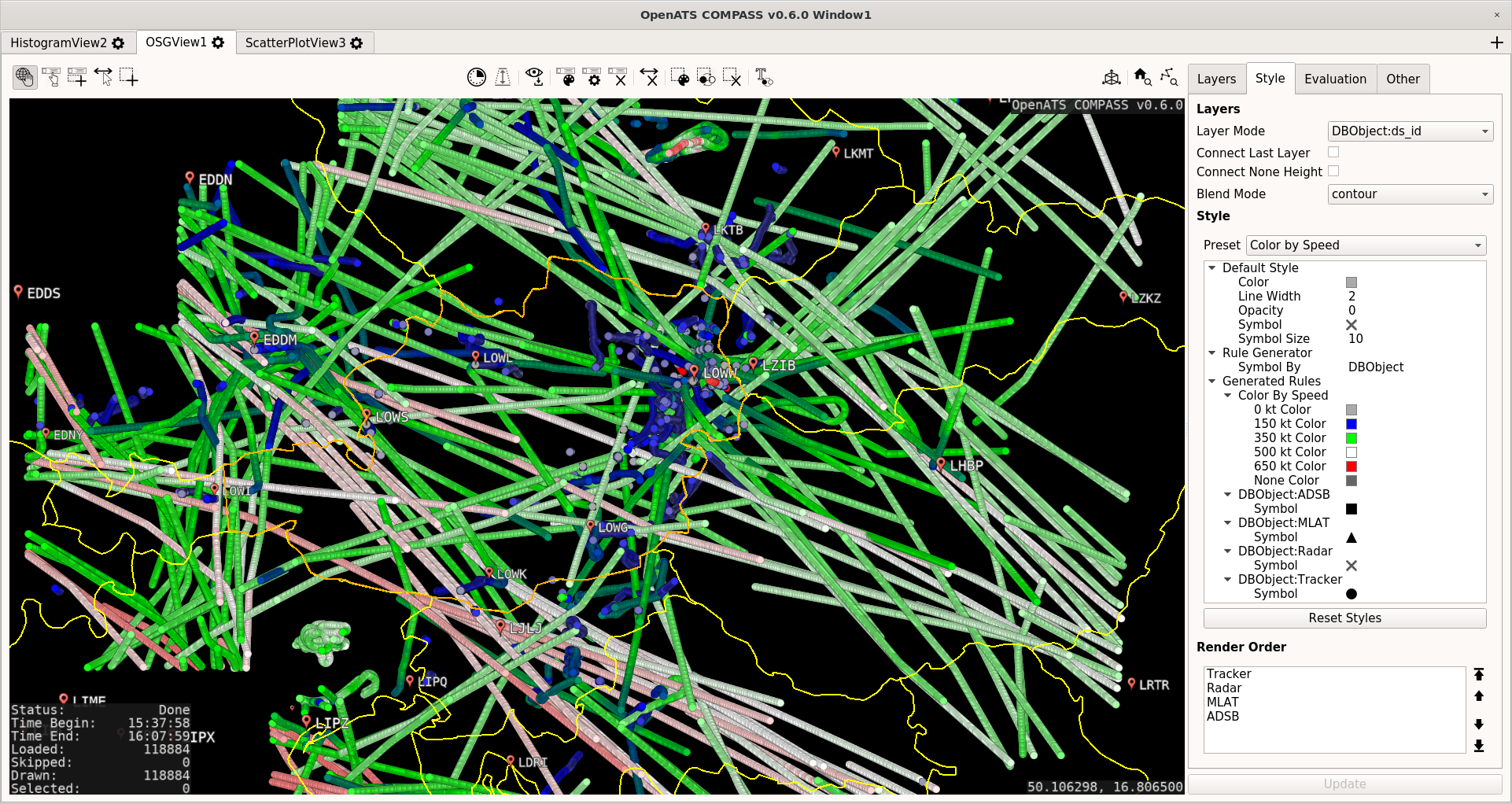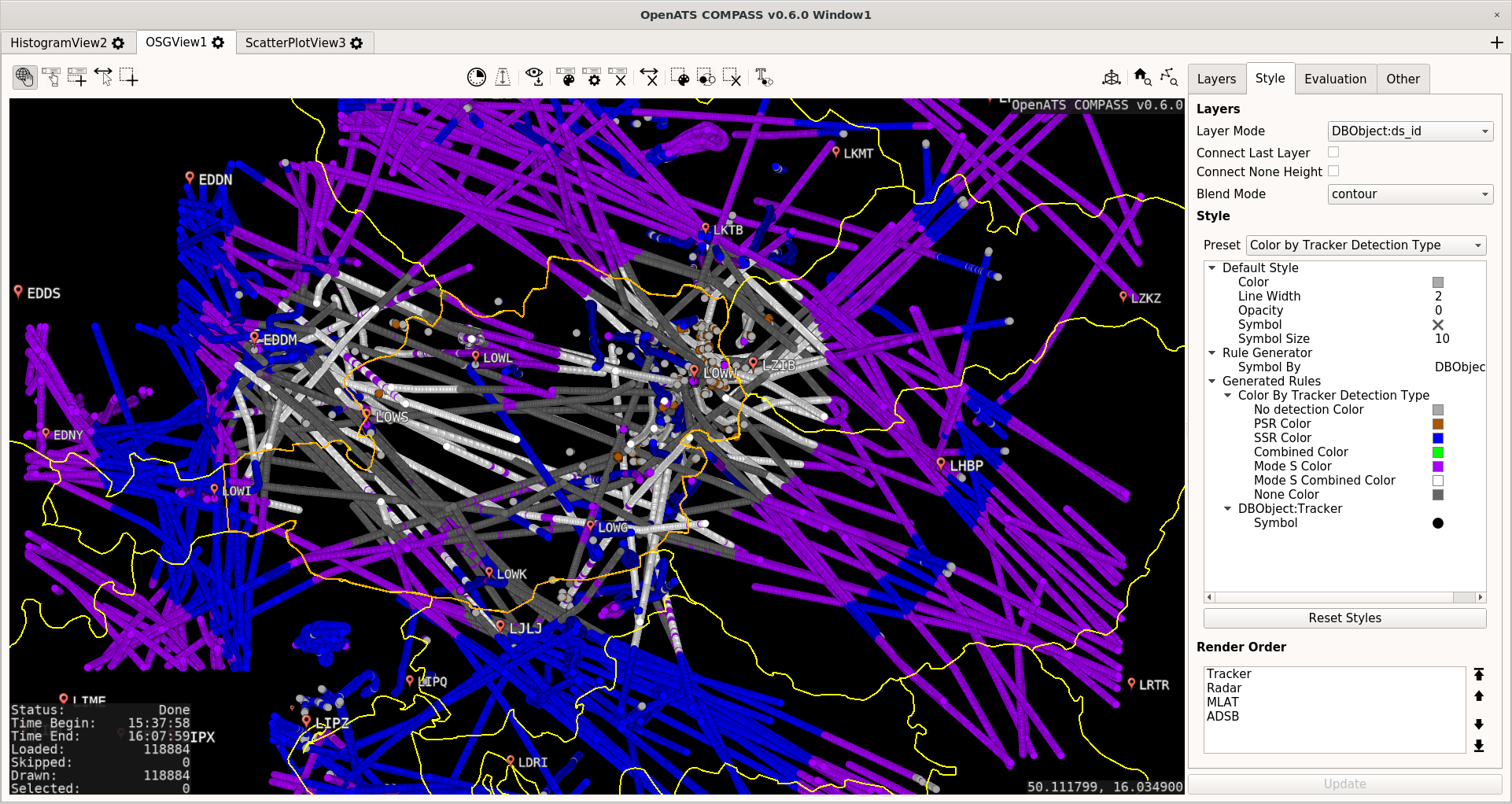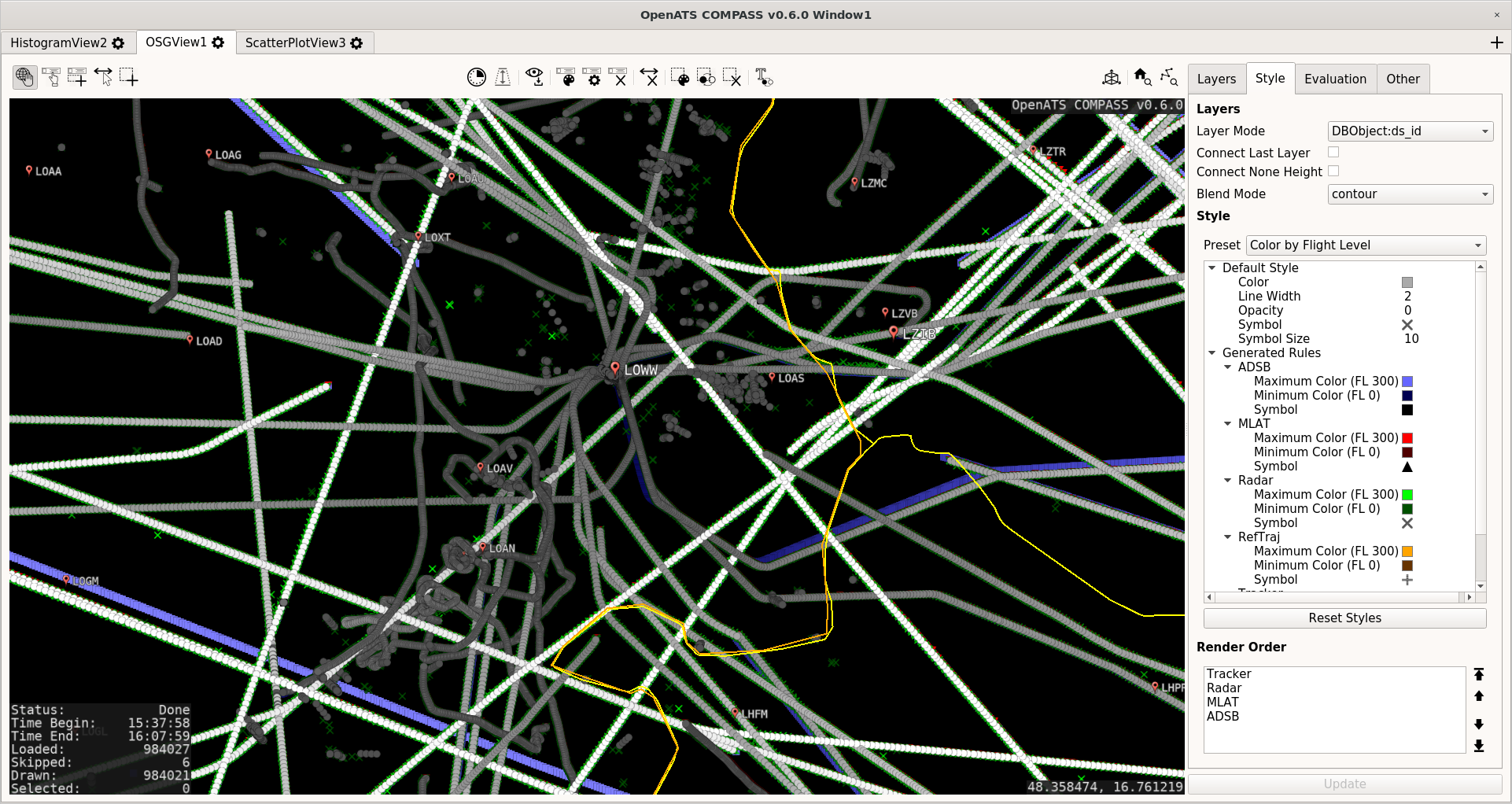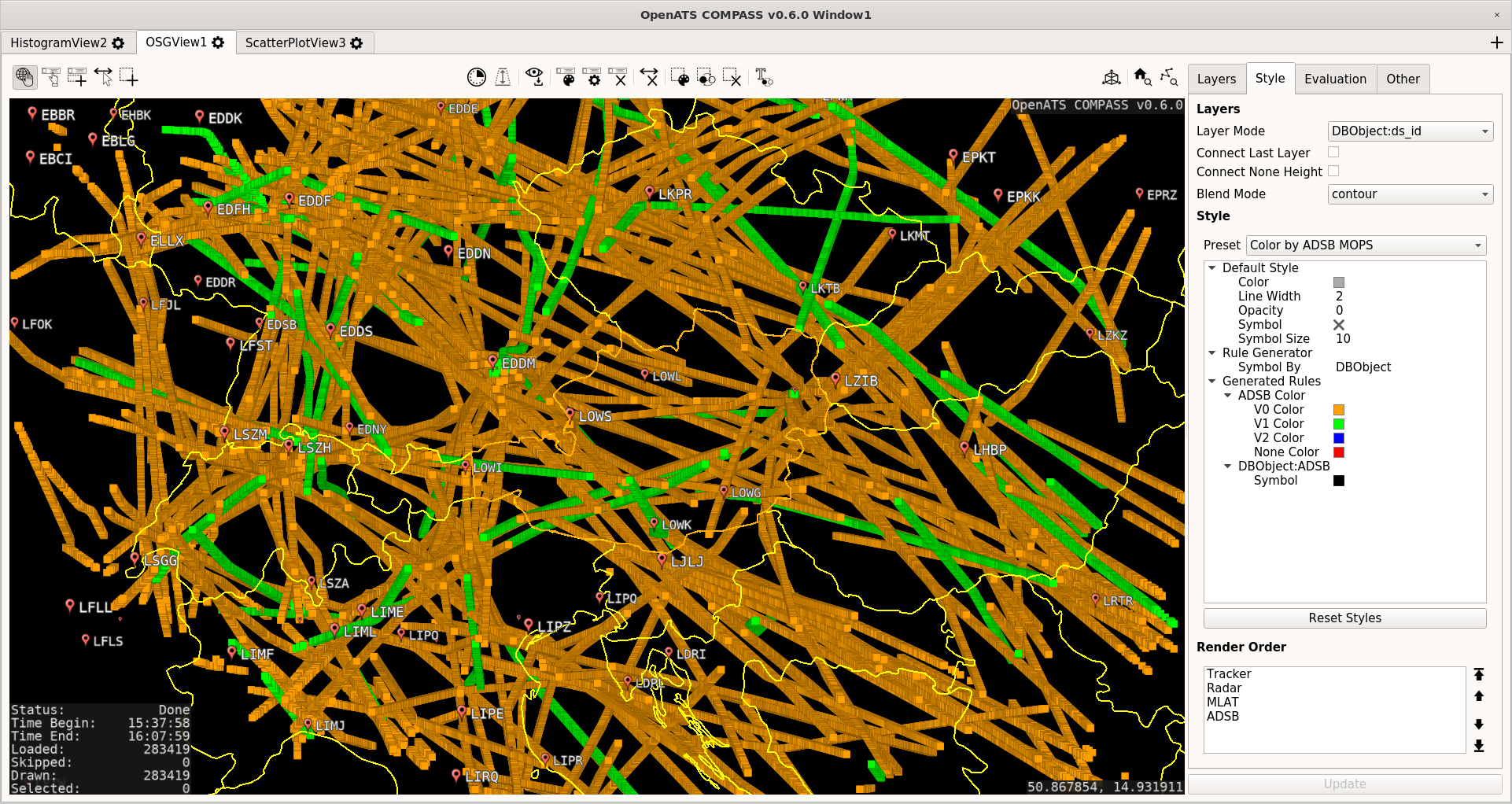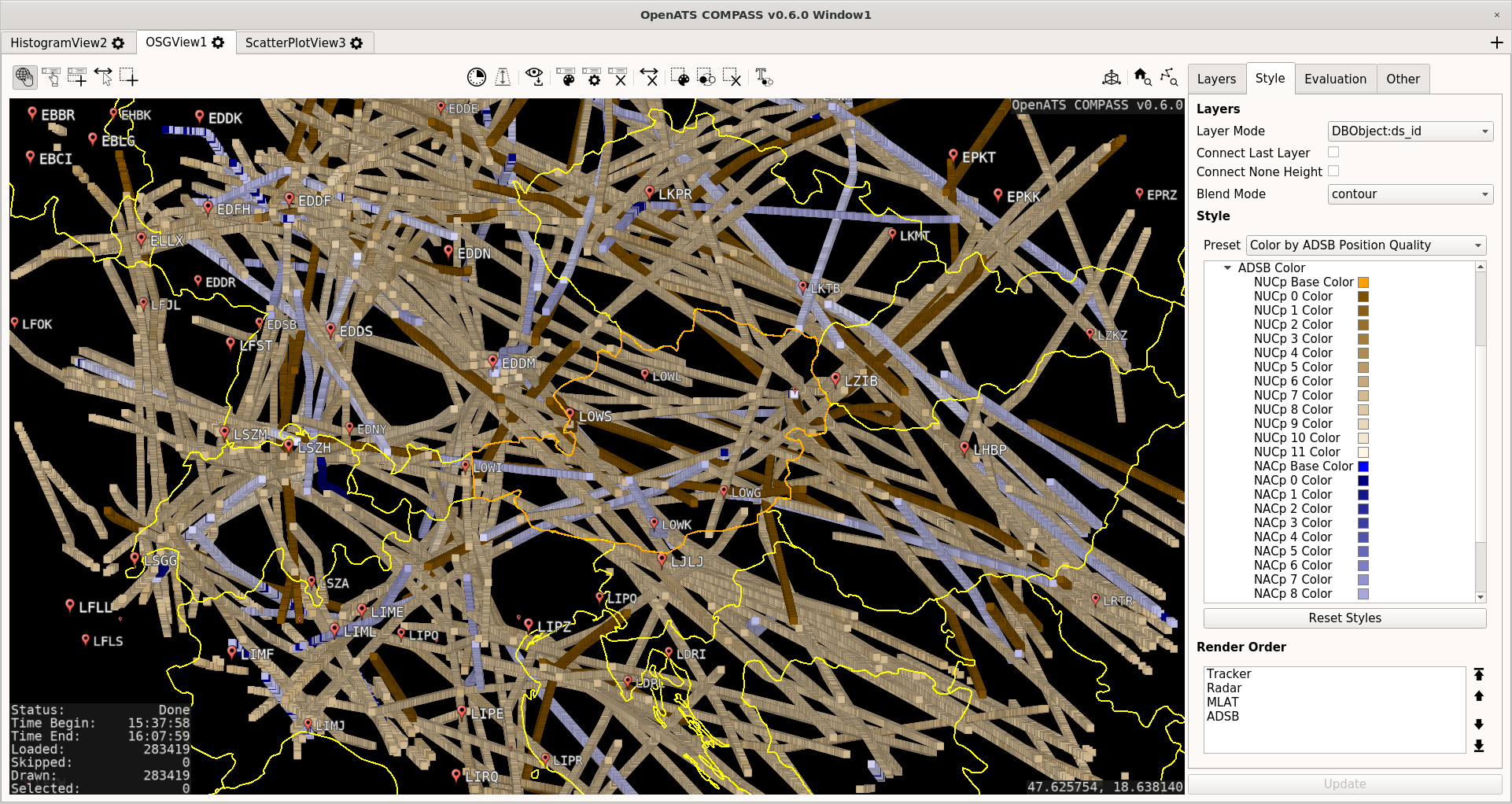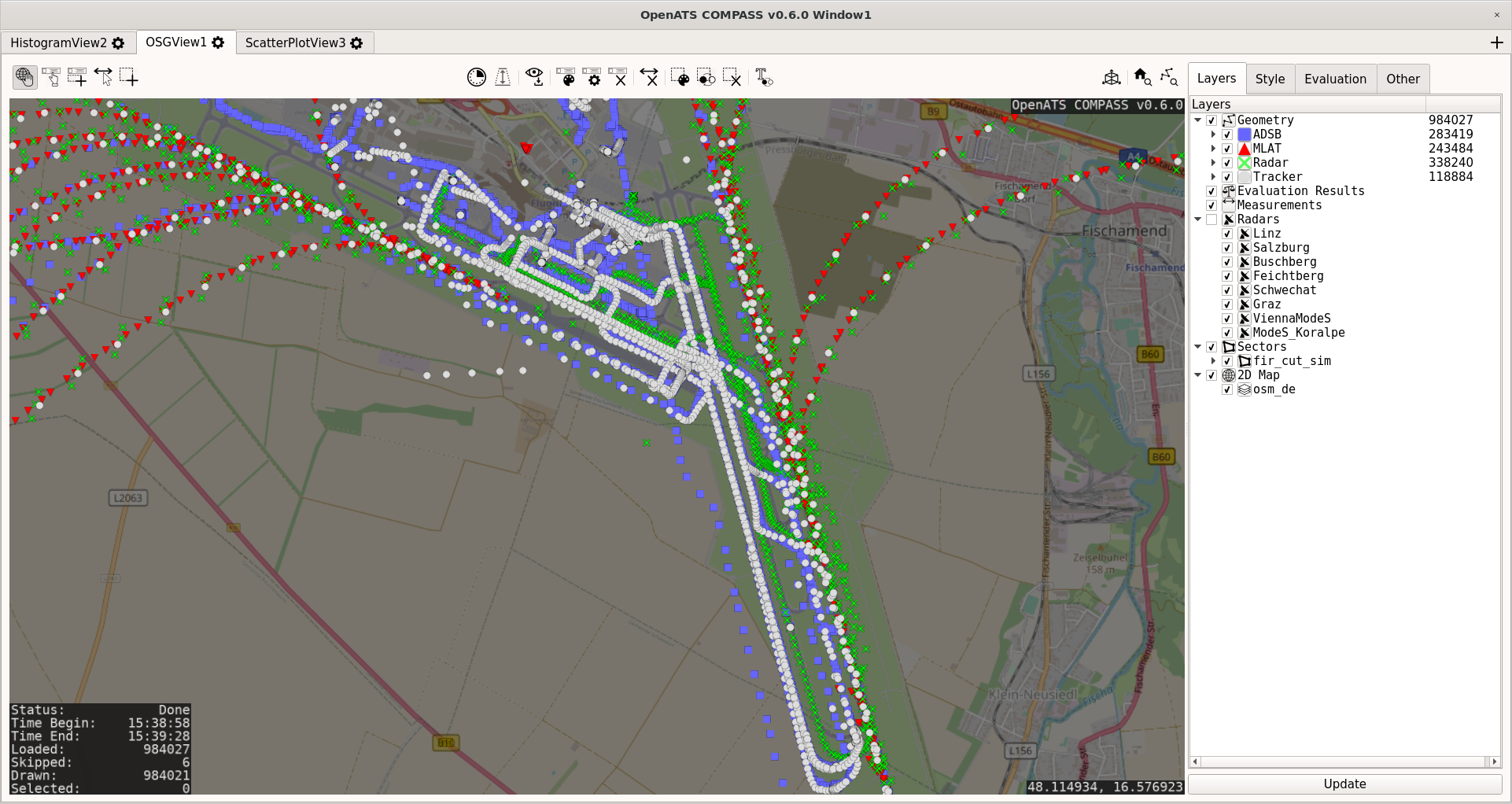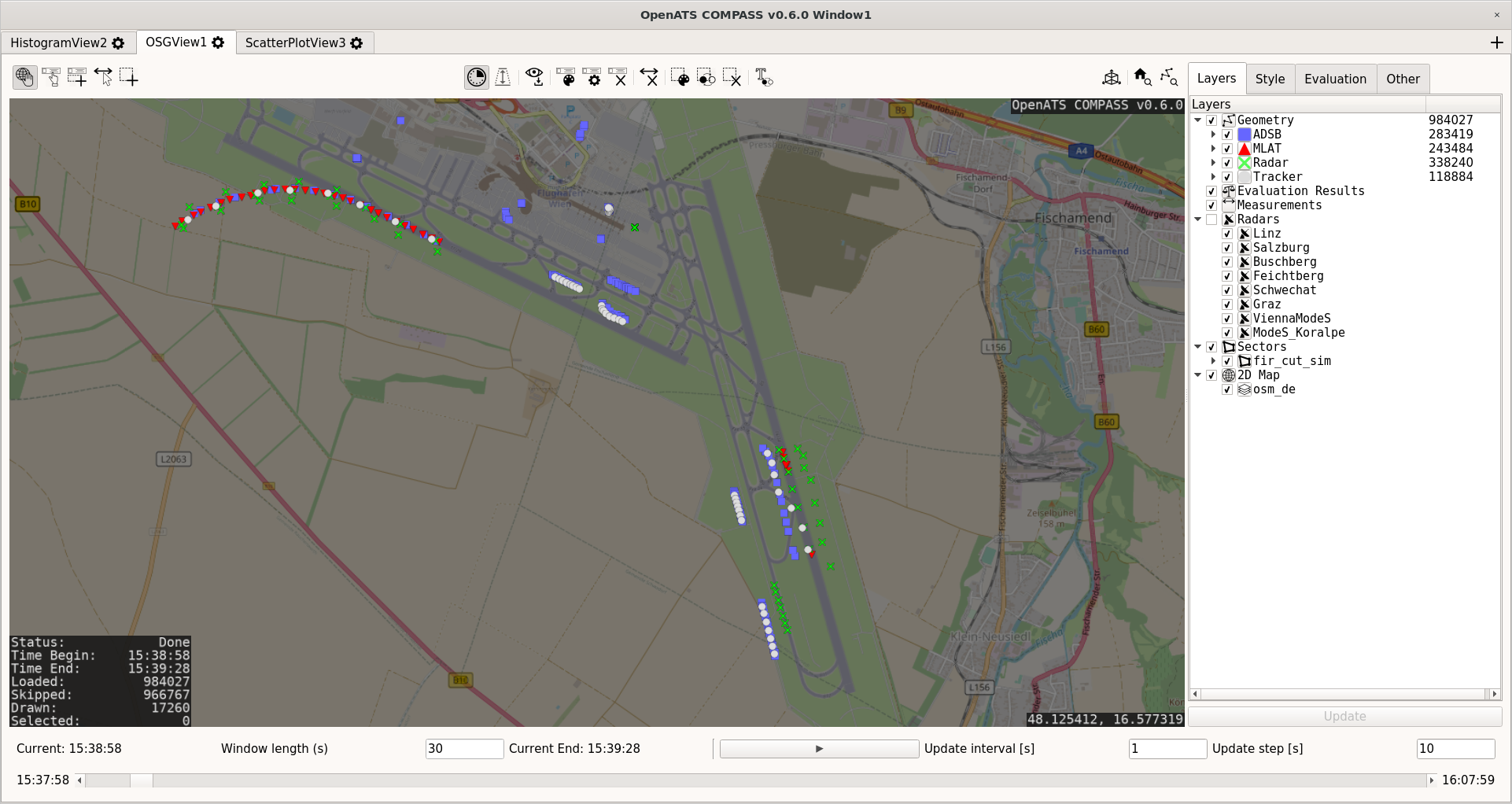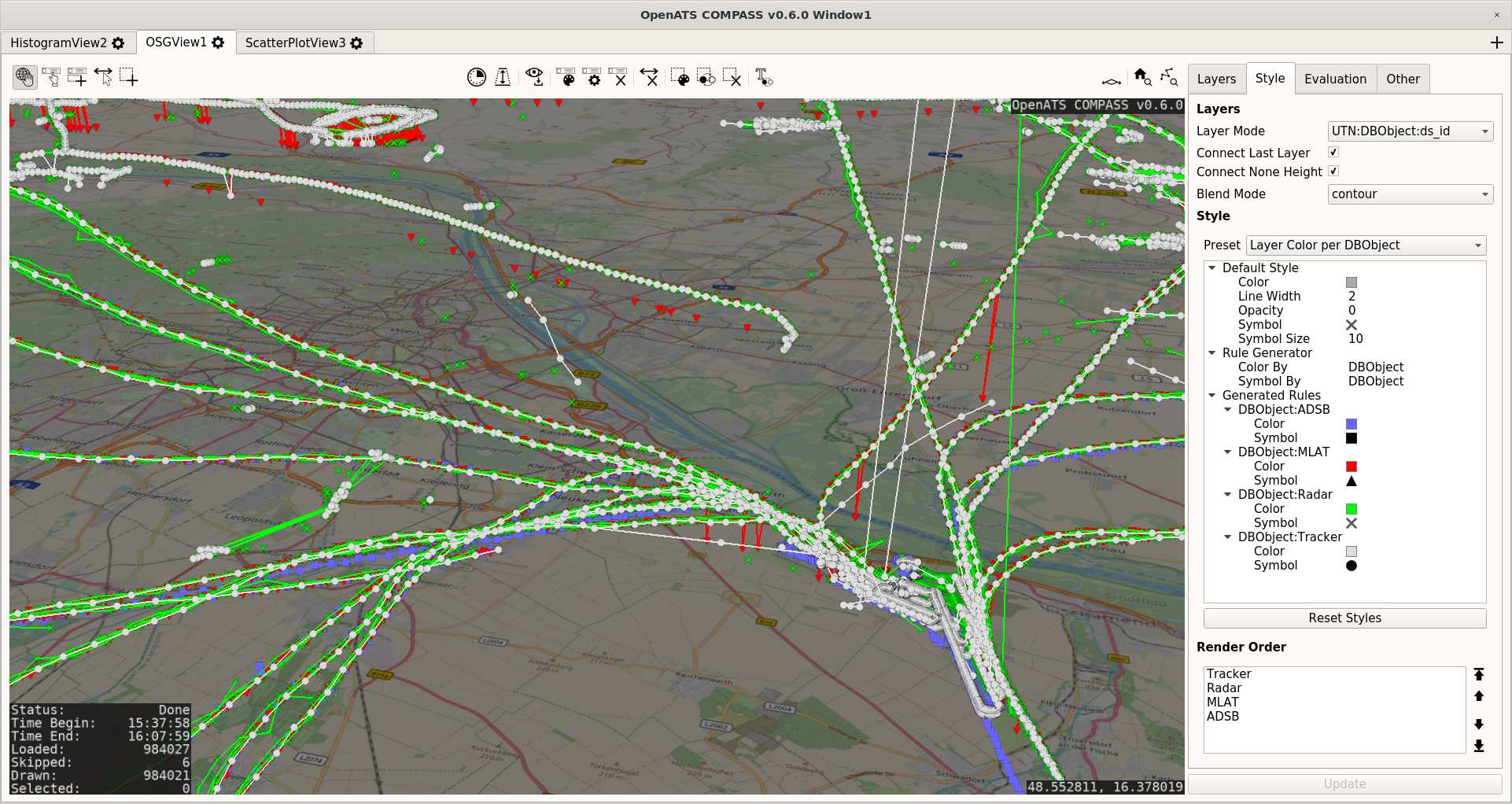
The OpenATS COMPASS Client is a tool for analysis, visualization and evaluation of ATC surveillance data. The name is short for compliance assessment. It enables efficient, customizable workflows for inspecting hours and days of recorded surveillance data while also supporting live network display.

Common use cases:

  • Textual inspection of ASTERIX contents
  • Sensor / tracker position accuracy and coverage
  • Issue confirmation based on ATCO reports
  • Comparison of operational and re-tuned sensors / system trackers
  • Statistical evaluation of EUROCAE standard compliance

The application is highly configurable and developed for air traffic surveillance professionals. A user manual and YouTube videos are provided for new users.

The C++ source code is released under GPL-3.0; the Linux AppImage and user manual are released under CC BY 4.0. Free for anyone to use, including commercial usage.

Please note that the released C++ source does not include the Geographic View (geographical data display), which is included in the released AppImage only.

Highlights

  • Self-assessment of surveillance performance – identify improvement areas in ATC sensor and tracking solutions
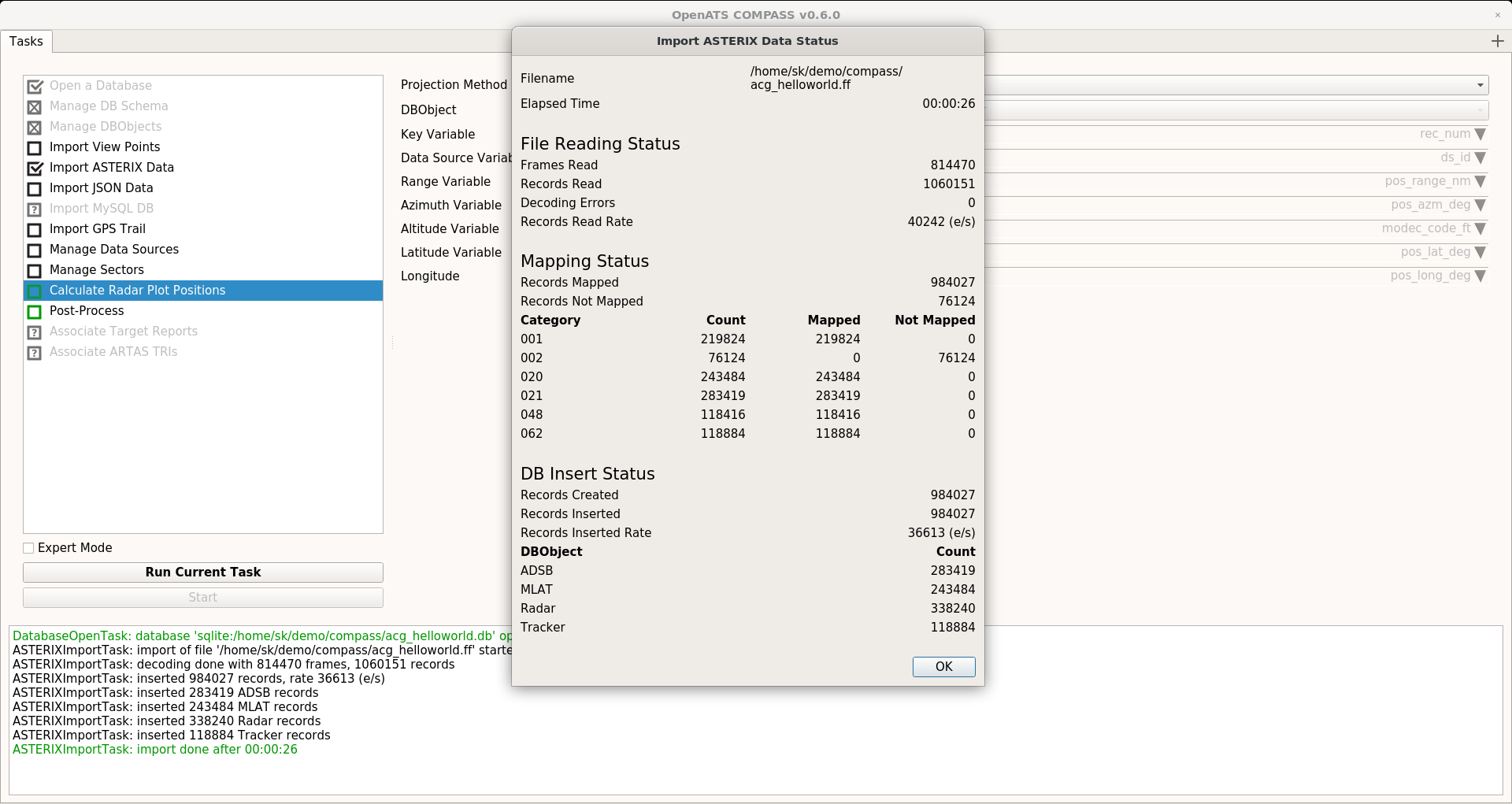
  • Customizable ASTERIX import – Radar, MLAT/WAM, ADS-B and System Tracker into a low-footprint database
  • High-performance processing – 24+ hour datasets with a low memory footprint
  • Multiple synchronized Views – Geographic, Table, Histogram, Scatter Plot, Grid with cross-selection
  • Reference trajectory reconstruction from Traffic of Opportunity (advanced association, error estimation, smoothing)
  • EUROCAE compliance evaluation – ED-87C/D/E, ED-116, ED-117/A, ED-142 with PDF / DOCX / JSON reports
  • Open-source Linux AppImage – extendable, free for any use; advanced features in the professional license
Data Import

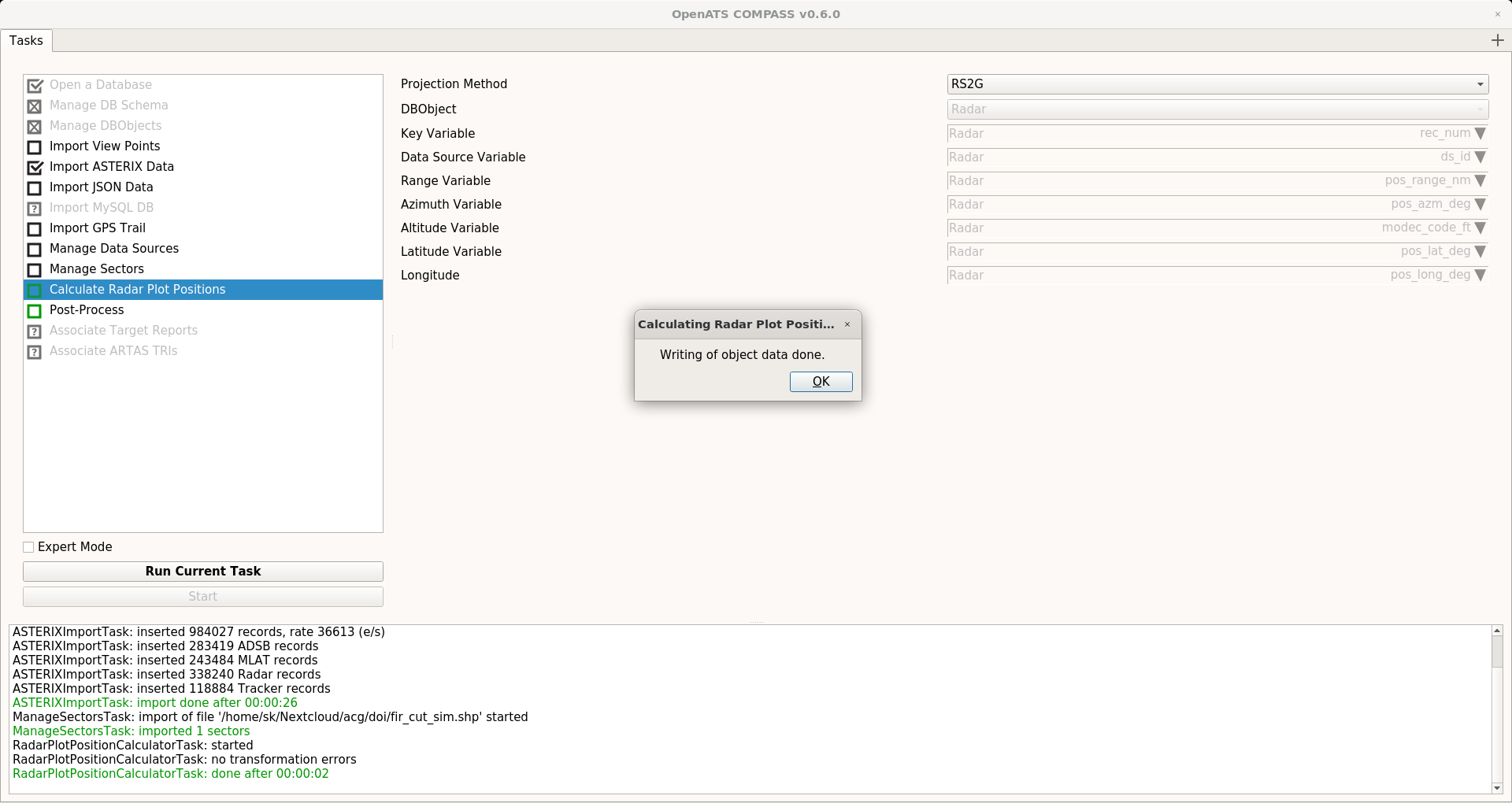
ASTERIX recordings, network, GPS trails, sectors

  • Organized in a Data Context: a named operational context grouping:
    • data sources, sectors, FFTs, ASTERIX decoding settings and colors 
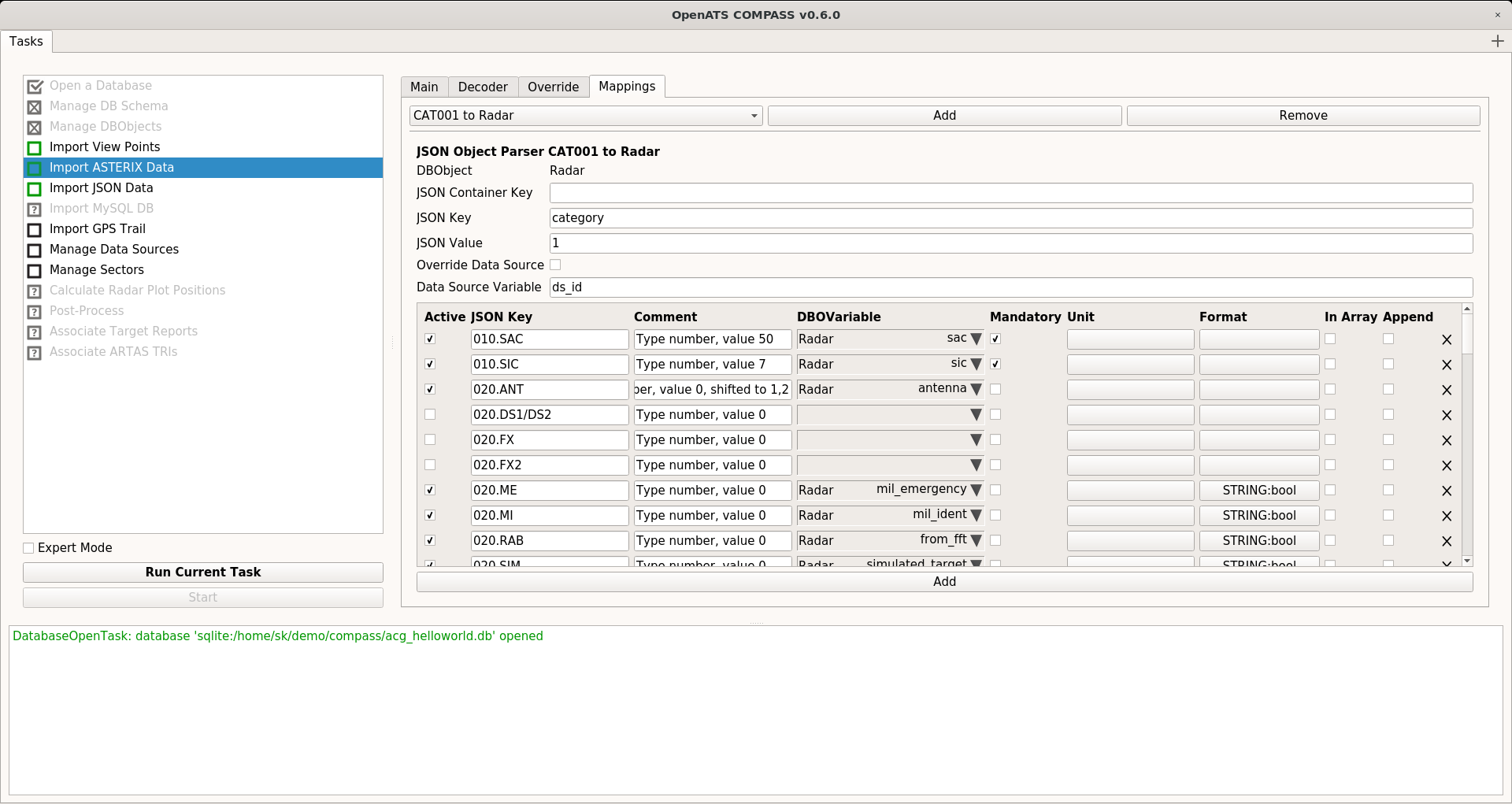
  • Offline import of ASTERIX recordings (RAW/Netto, IOSS, RFF, PCAP, JSON) into a single-file database container
  • Customizable mappings, up to 4 lines per data source
  • Live ASTERIX import from UDP network streams
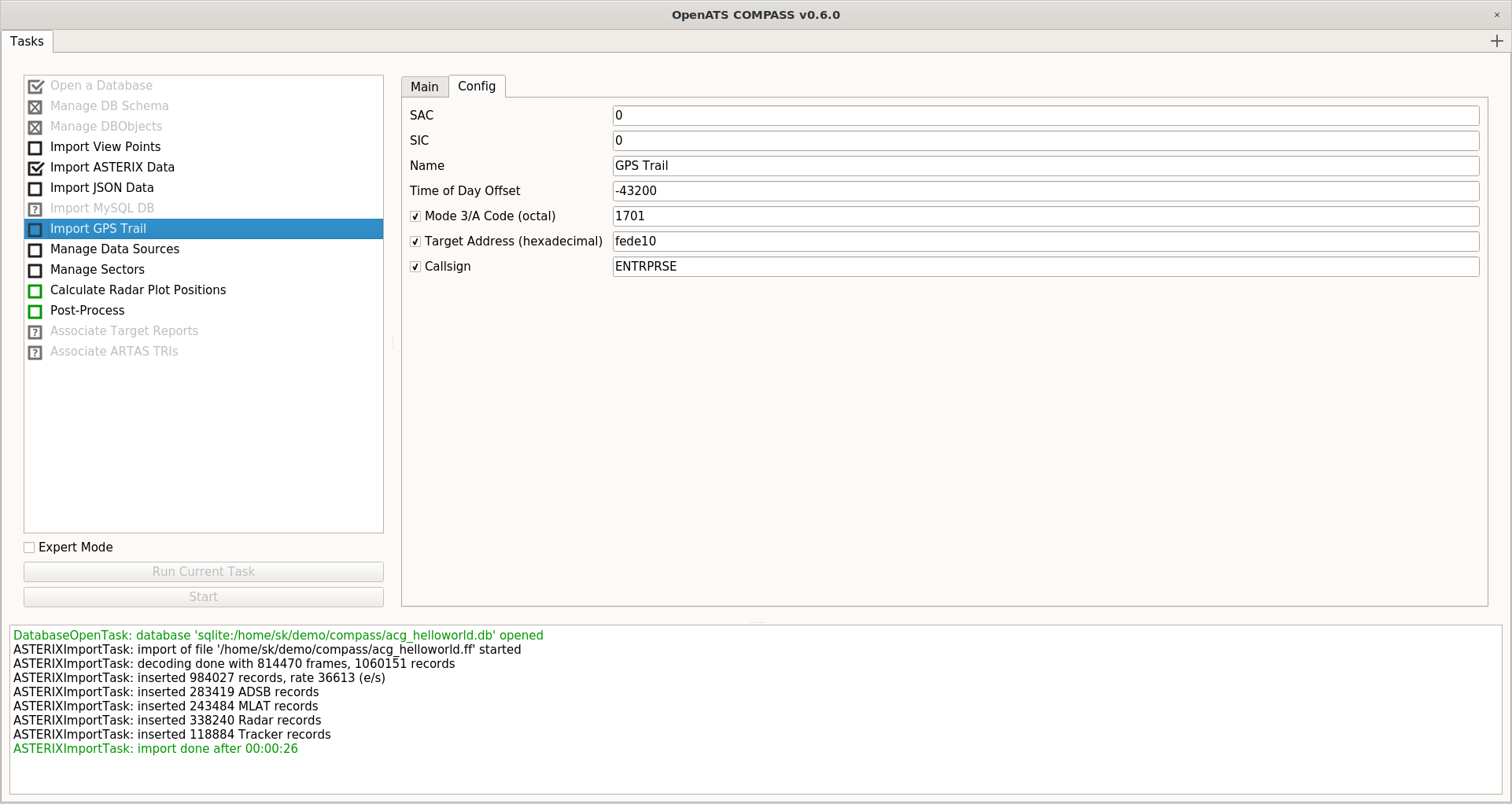
  • (D)GPS trail import from NMEA files (test drives / test flights)
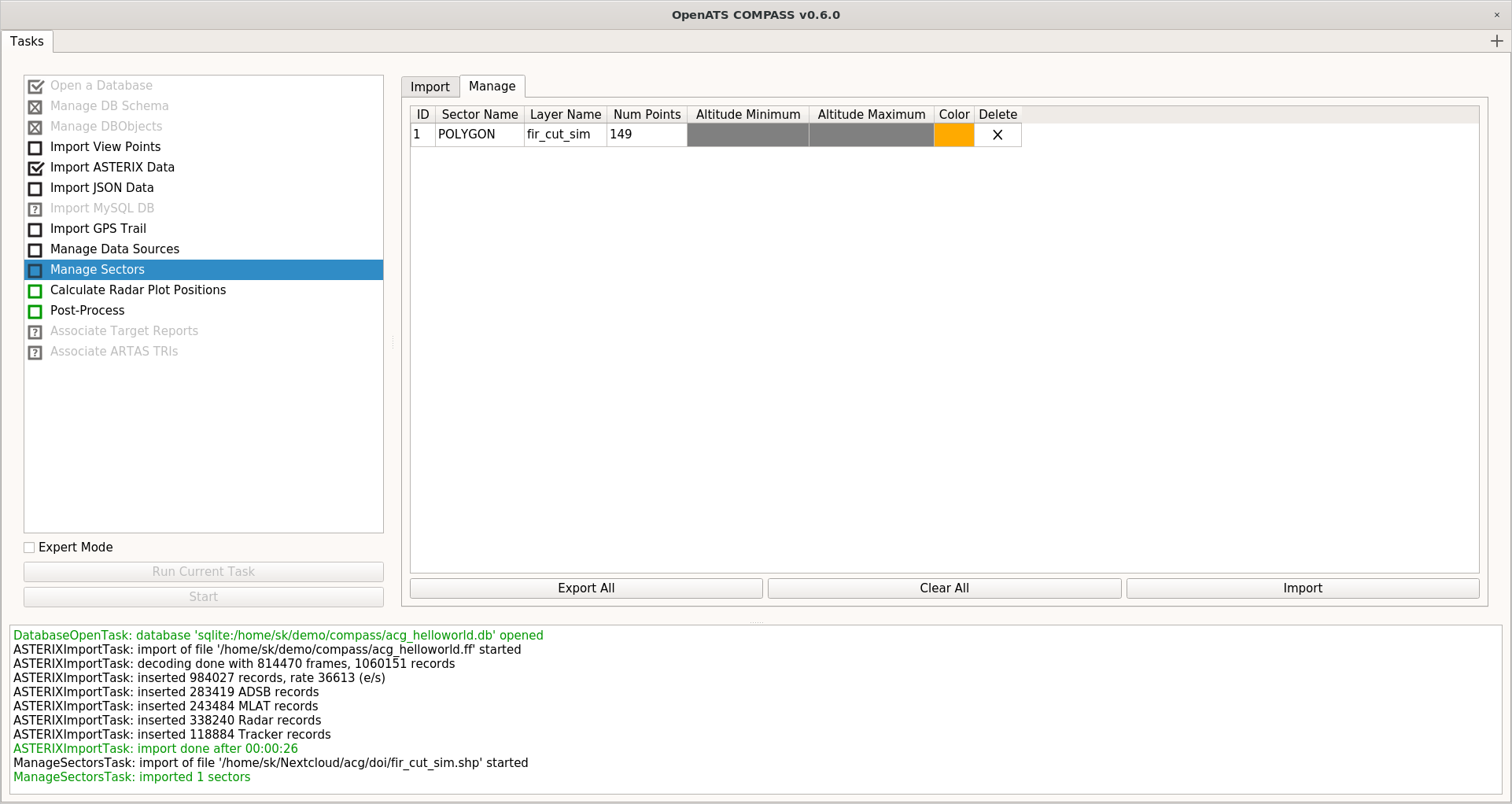
  • Sector import from ESRI Shapefiles, GML, KML, GeoJSON
  • Supported data source types: Radar, MLAT / WAM, ADS-B, System Tracker, Reference Trajectory
  • 24h+ recordings via EPOCH timestamps
  • Powered by jASTERIX for ASTERIX decoding

Predefined filters, custom filters, target identification, MLAT analysis

  • High-performance processing, low memory footprint
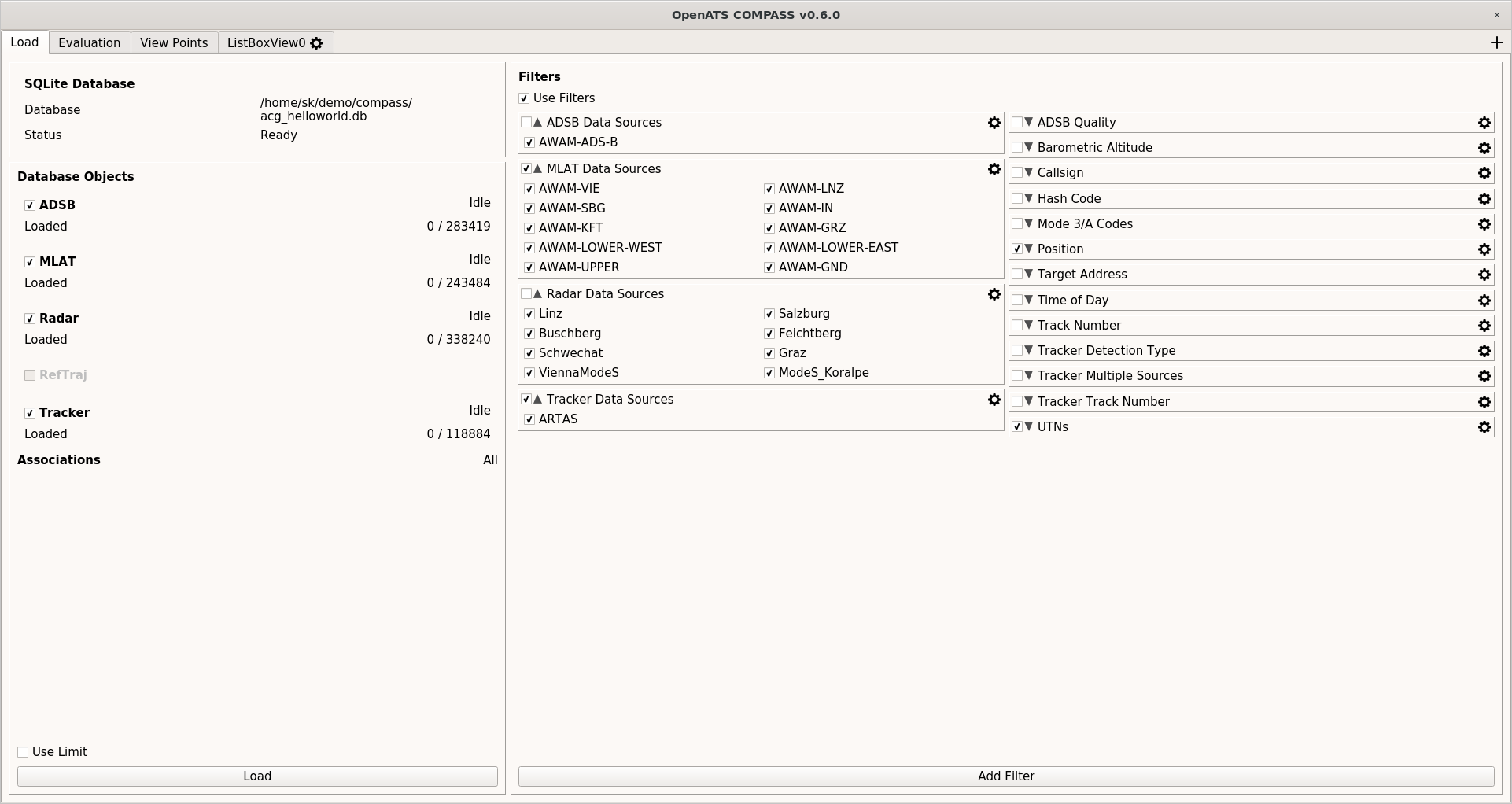
  • Filter system with predefined filters out of the box:
    • ADS-B Quality / MOPS, Aircraft Address, Mode 3/A, Mode C, Position, Time of Day, Track Number, MLAT RUs, …
  • Adding and editing of custom filters via the GUI
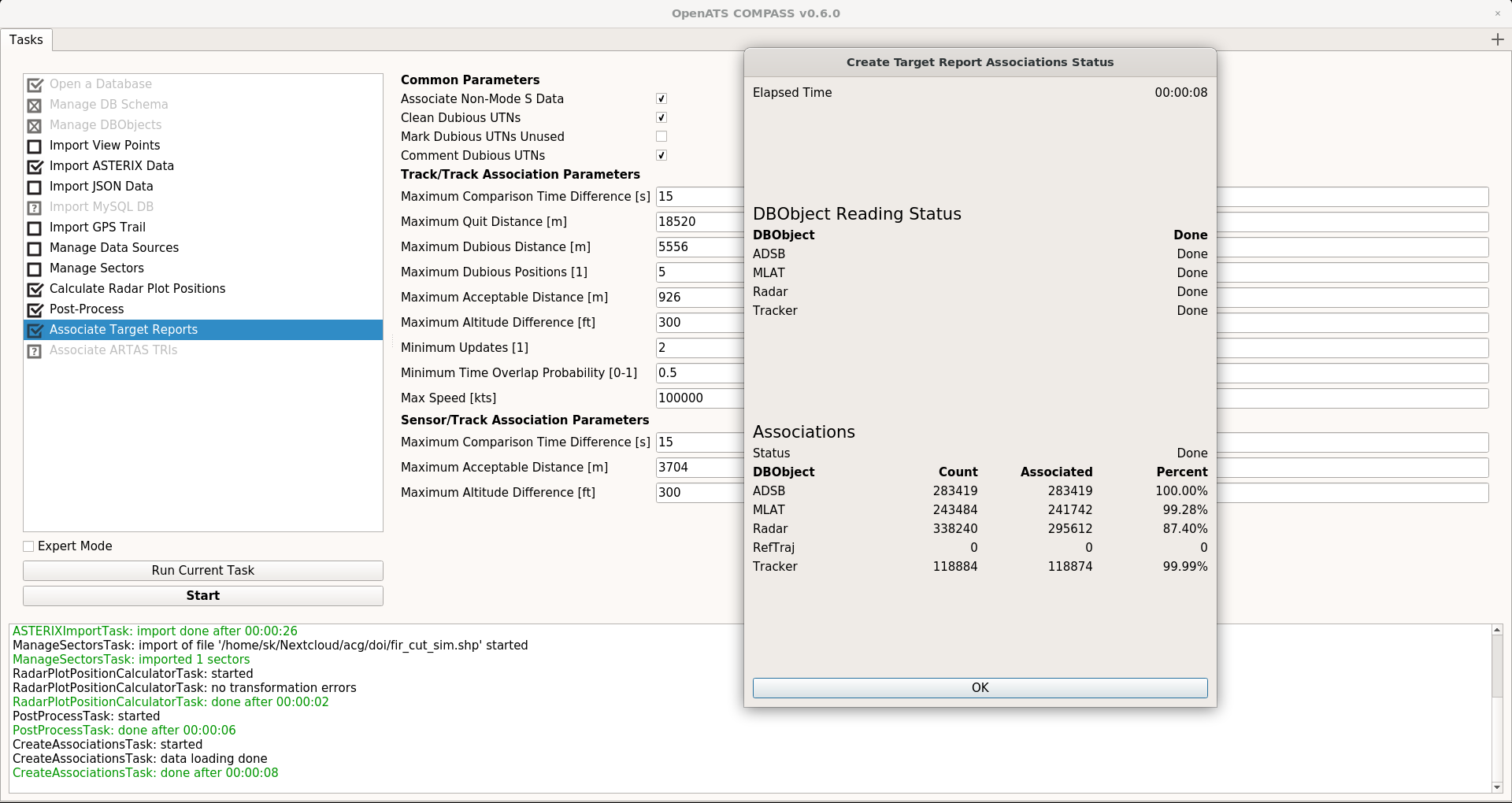
  • Target identification across data sources (find unique targets)
  • ARTAS track association (TRI) analysis
  • Per-DSType “Analyze Data Source” task (currently MLAT: data item inspection, sensor coverage and probability of detection, position accuracy, RU coverage, RU effect)

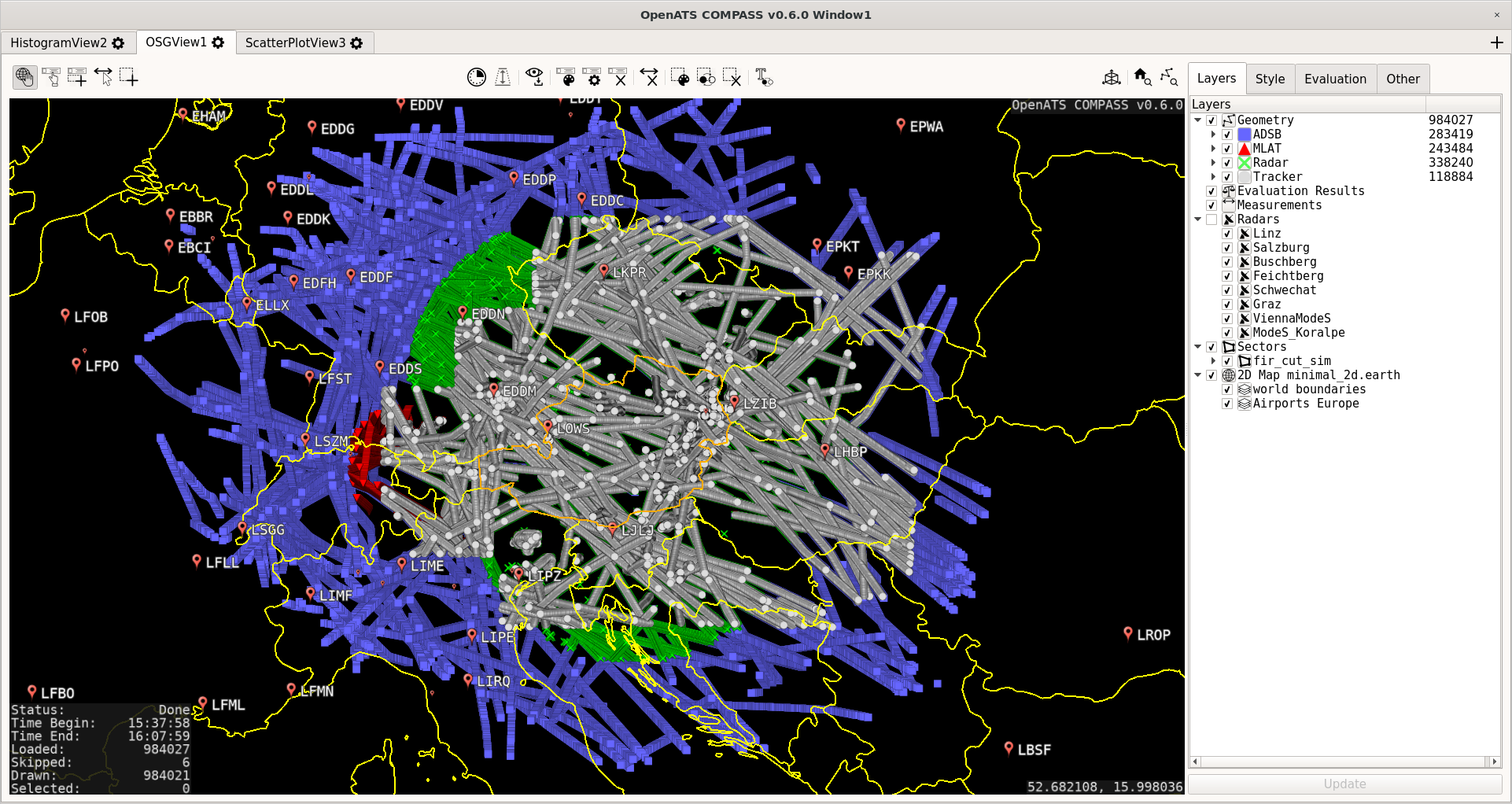
Customizable map and 2D/3D surveillance display via osgEarth / OpenSceneGraph

  • Map widget based on osgEarth with customizable map / terrain layers (OpenStreetMap, ArcGIS, ReadyMap, minimal map)
  • Surveillance data rendered via OpenSceneGraph with per-DBContent / per-data-source / per-line styling
  • High-speed time-filtered display
  • Selection, labeling, distance measurement, data operations
  • Configurable layering and styling via the shared Layers Tree
  • 2D and 3D sector display, GeoTIFF import, grid overlays
  • Automated labeling, configurable level-of-detail
  • Low memory footprint – approx. 16 million target reports in ~8 GB RAM

Textual inspection in one unified, sortable table

  • Single unified table across all DBContents, controlled by the shared Layers Tree
  • Sortable columns
  • Configurable variable list presets:
    • Mode A/C Info, Track Lifetime, ADS-B Quality, Horizontal Movement, Vertical Movement
  • Cross-view selection from / to other Views
  • Export of the current table to CSV (file or clipboard)

Distribution and correlation of any numeric variables

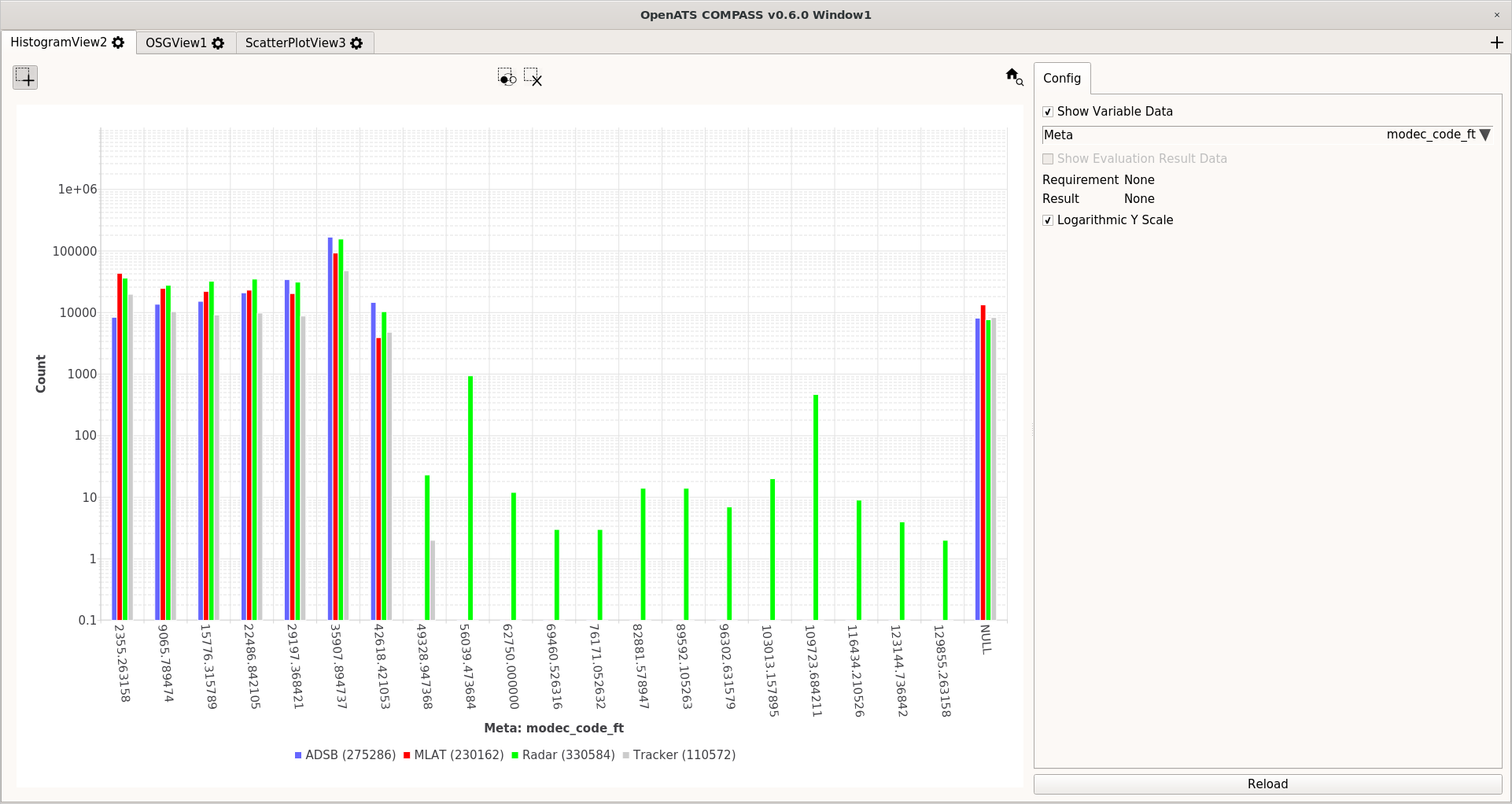
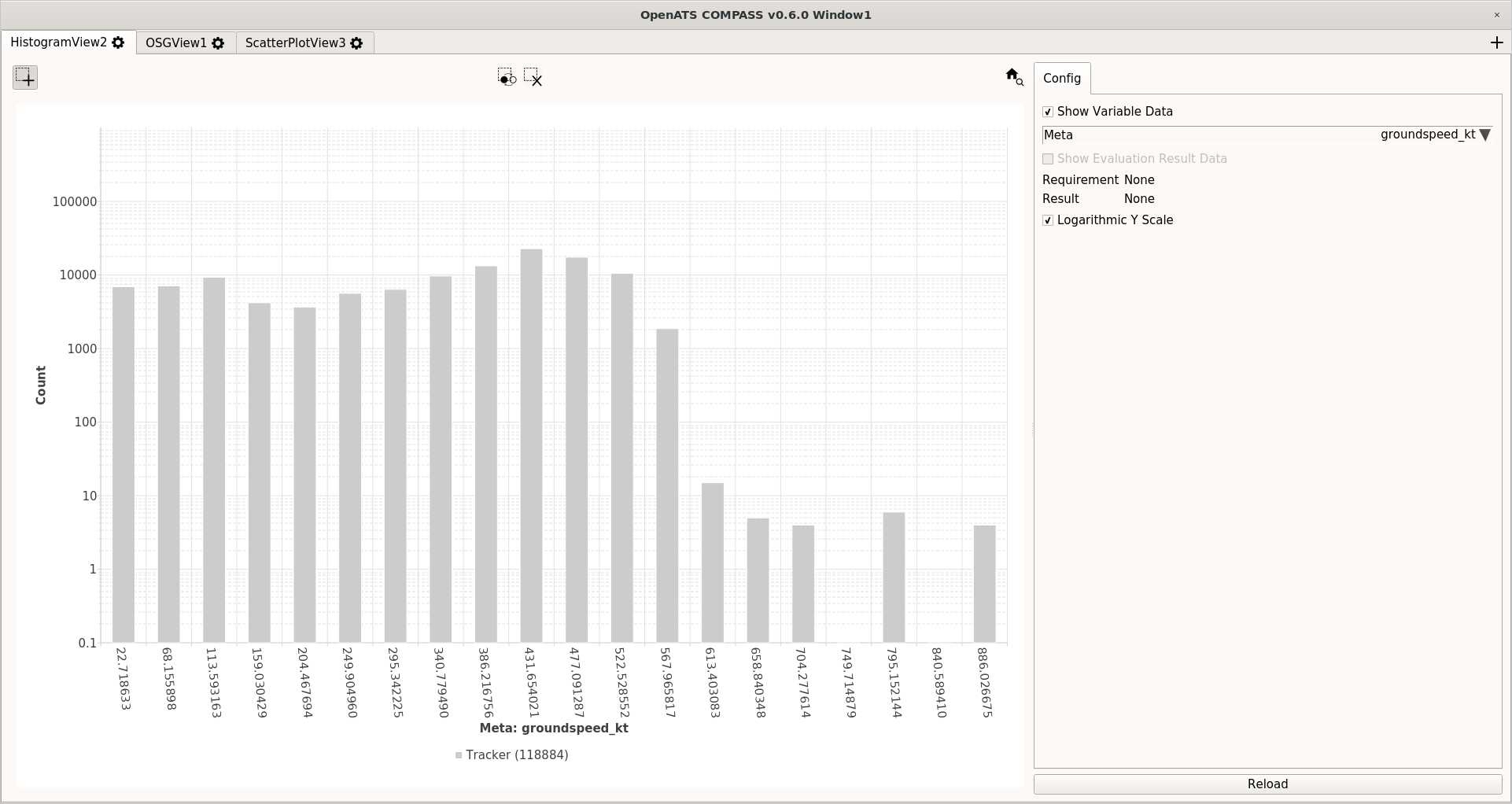
  • Histogram View – distribution of one numerical variable
    • Per-DBContent stacked bars
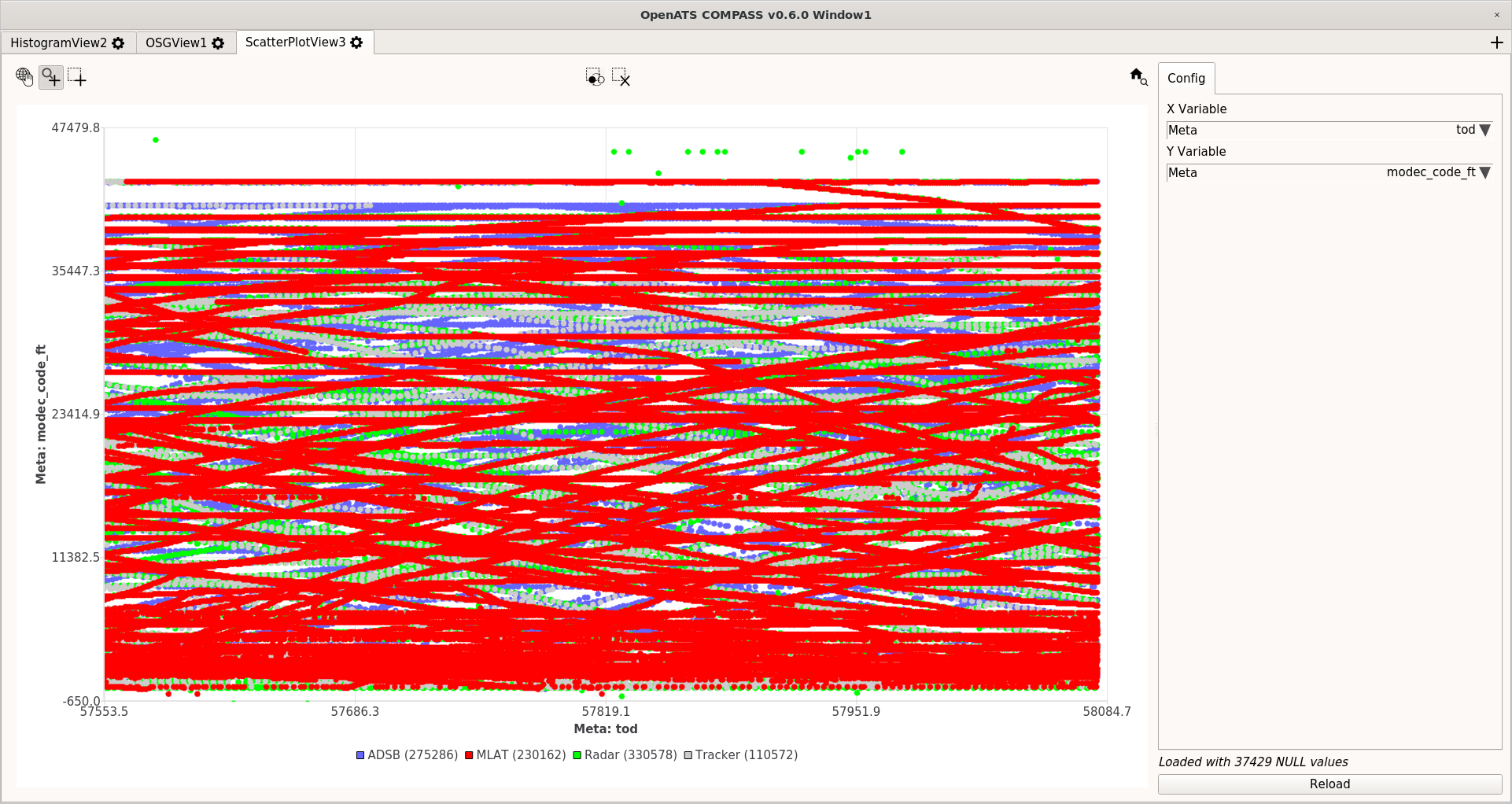
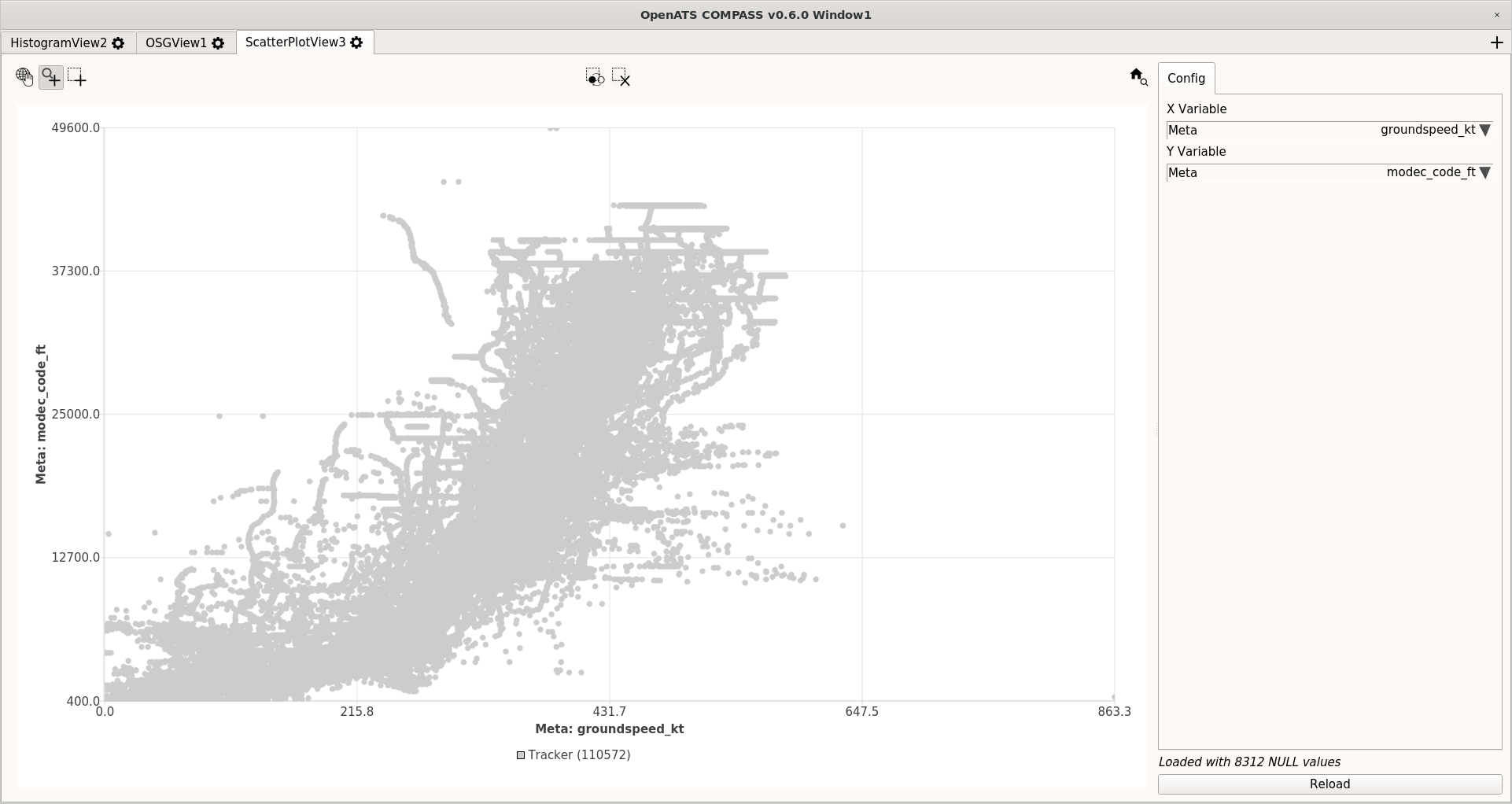
  • Scatter Plot View – X/Y distribution of two numerical variables
  • Grid View – 2D grid over two numerical variables
    • Statistical summary of a third (Count, Min, Max, Mean, Var, Stddev)
    • Export to Geographic View or GeoTIFF
  • All Views share the same global Color Mode (DSType, DBContent, Data Source, Data Source + Line)

Reliable references from Traffic of Opportunity or GPS trails

  • Reference Trajectory reconstruction from Traffic of Opportunity, or from imported (D)GPS trails
  • Basic reconstructor (free): secondary-attribute association with configurable distance scoring, Linear Uniform Motion Kalman filter
  • Advanced reconstructor (professional license):
    • Probabilistic association
    • Automatic radar bias estimation and correction
    • ADS-B-based slant range correction
    • JPDA for PSR / SMR plots
    • Probabilistic IMM filter with RTS smoother
  • Reconstructed reference is available like any other data source – usable in Views, filters, and as Evaluation reference

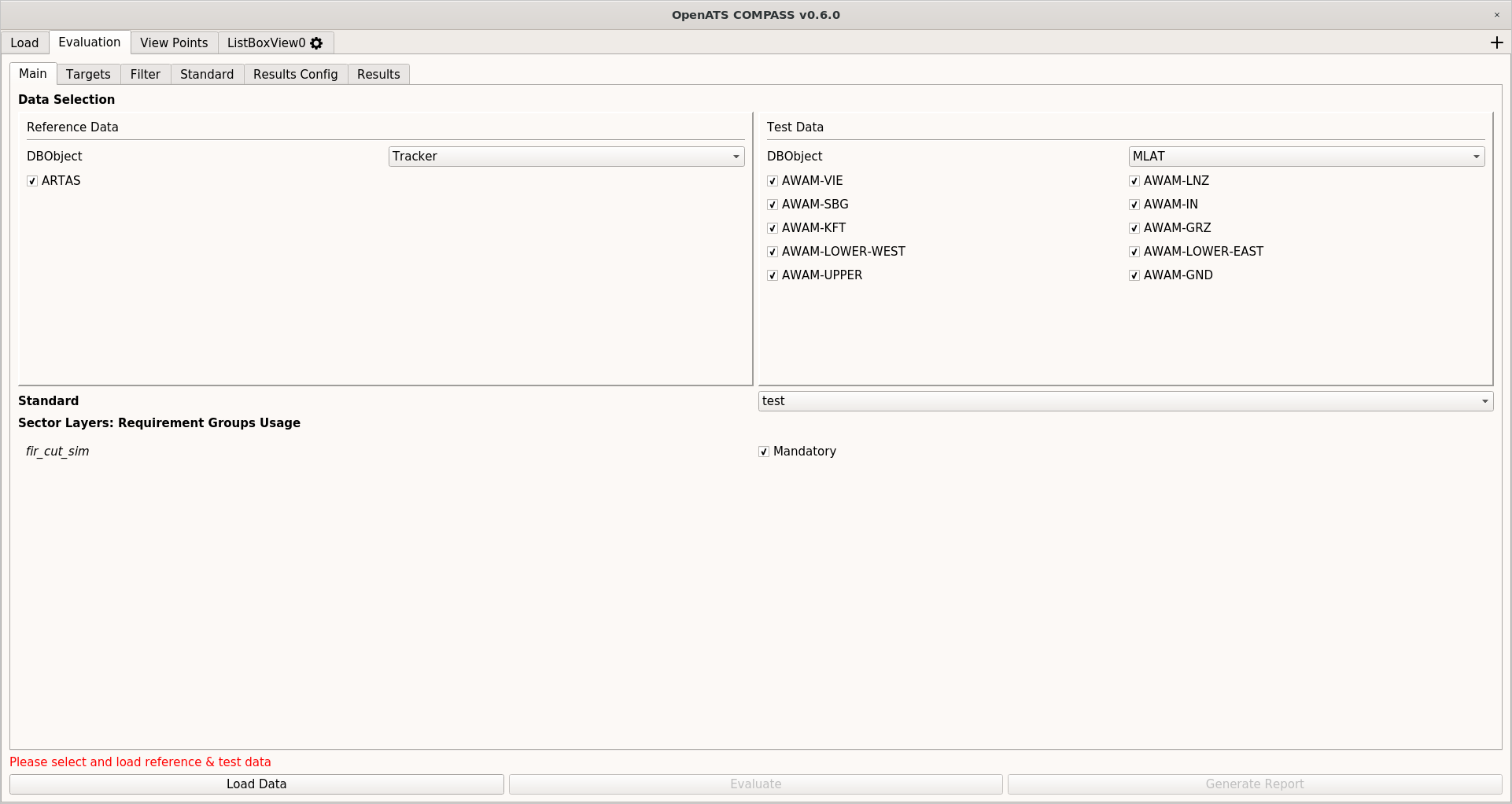
EUROCAE standard compliance and persistent reports

  • Generalized comparison of test data versus reference data
  • EUROCAE standards out of the box:
    • EUROCAE ED-87C/D/E (A-SMGCS Tracker)
    • EUROCAE ED-116 (SMR)
    • EUROCAE ED-117/A (Local MLAT)
    • EUROCAE ED-142 (Wide-area MLAT)
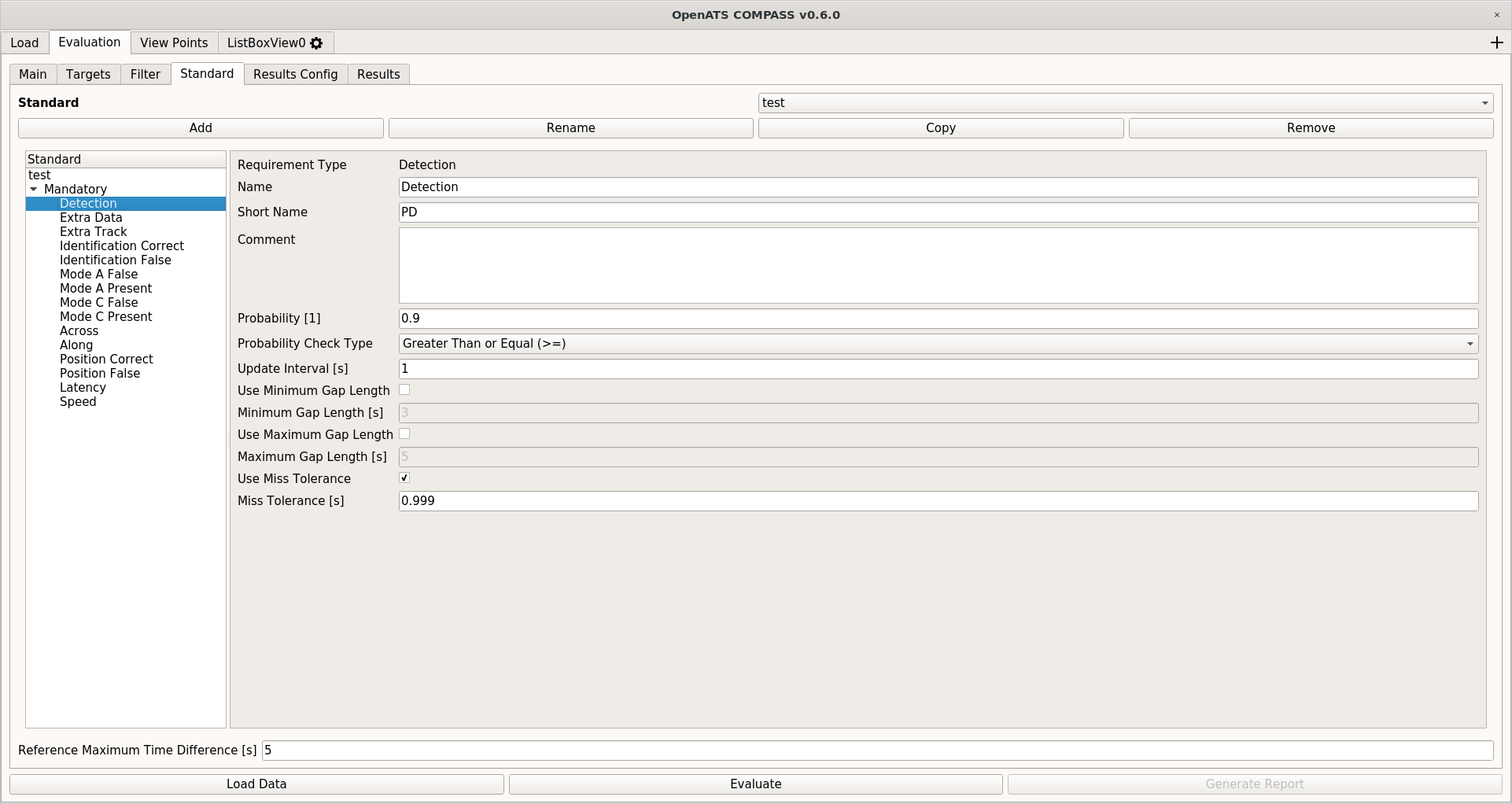
    • Custom standards built from configurable requirements
  • Requirement library:
    • Detection, Position Across / Along / Distance / Distance RMS, Position Latency, Radar Azimuth / Range, Identification Correct /False, …
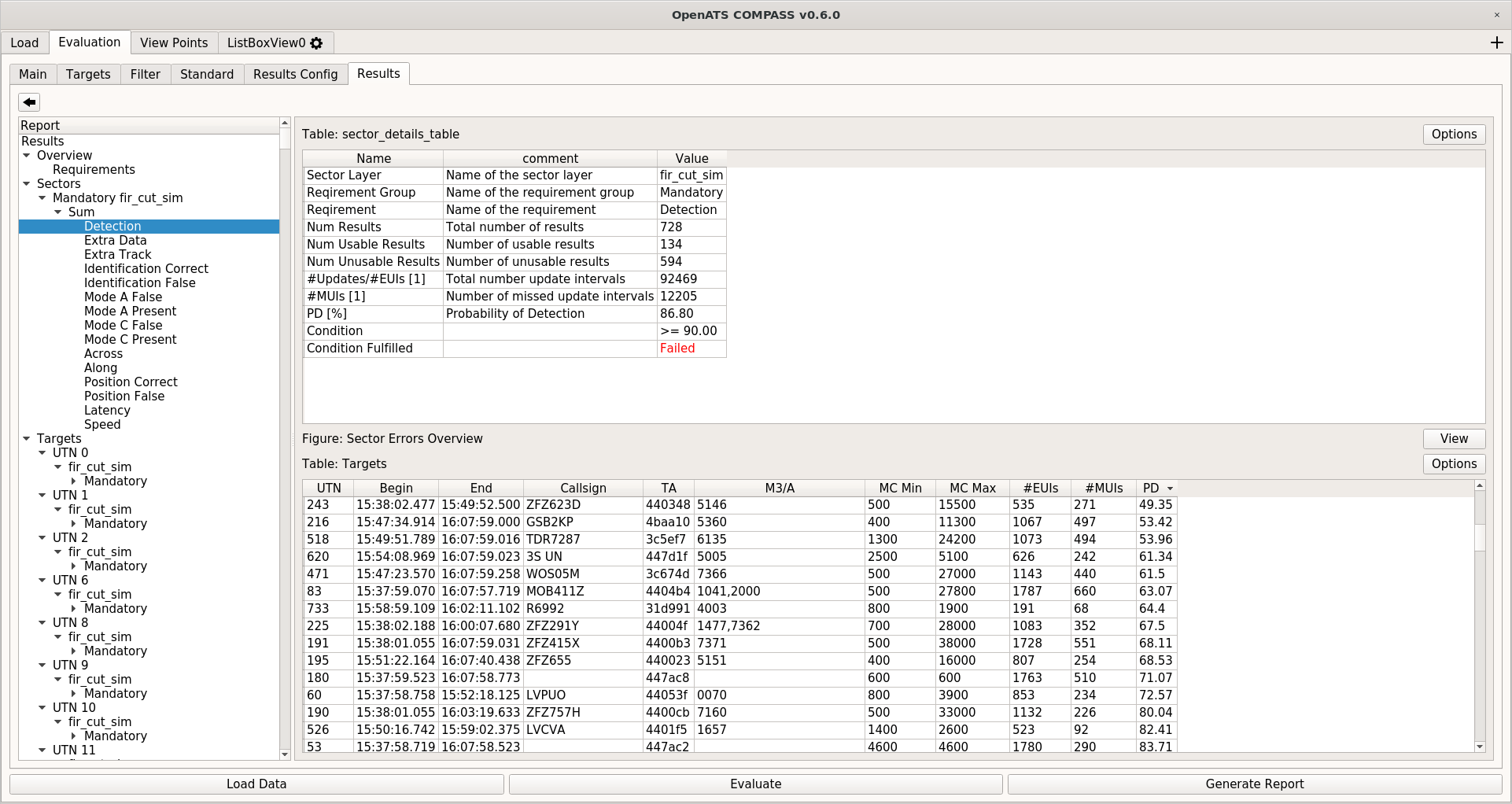
  • Results inspectable at several levels of detail (overview to sector to per-target)
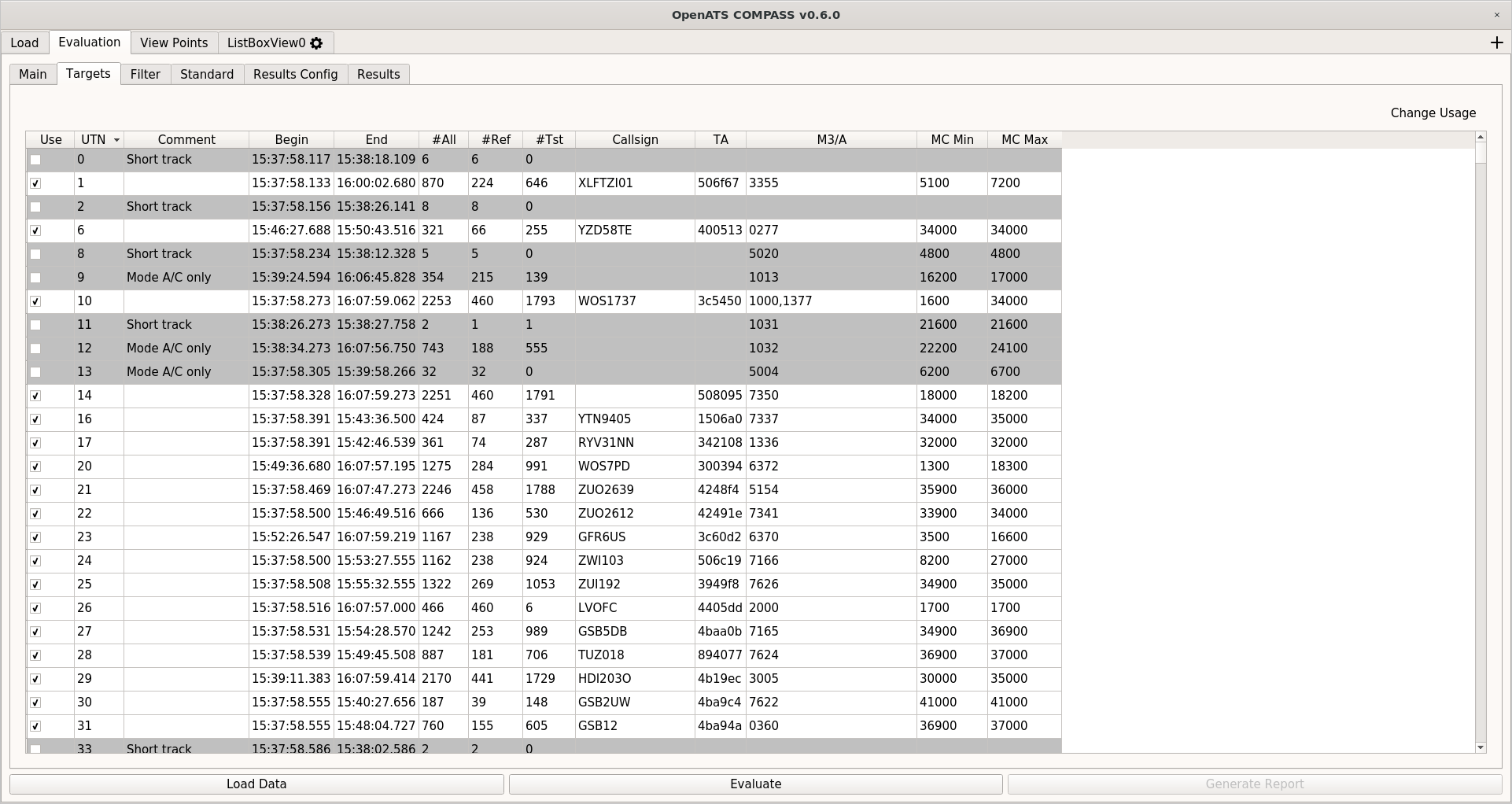
  • Automatic and manual removal of targets (short tracks, VFR, …)
  • Persistent Reports for important processing tasks, with management, refresh and export
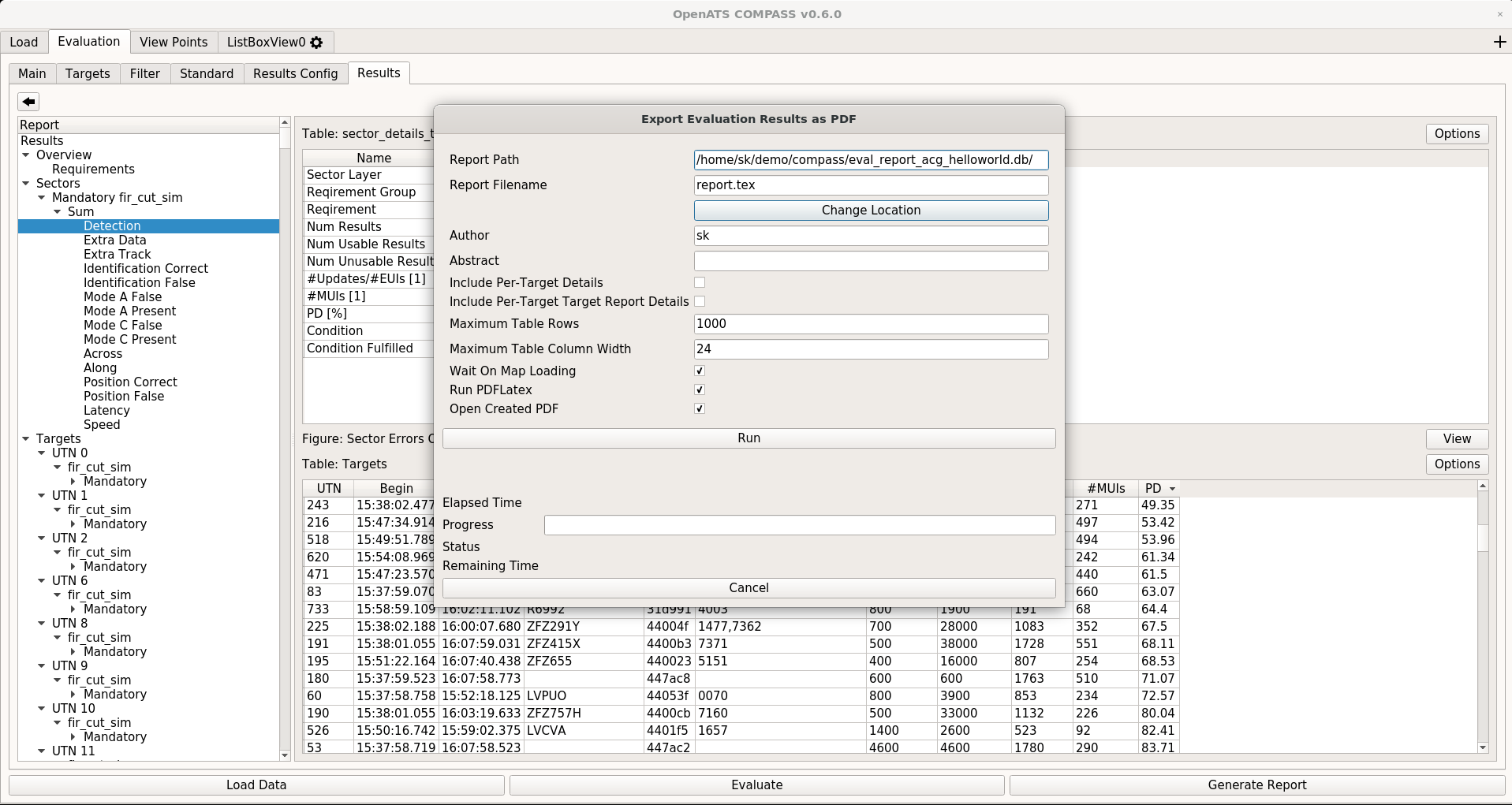
  • Report export: PDF, DOCX, LaTeX, JSON

Real-time network display with immediate analysis

  • Three application modes: Offline, Live: Running, Live: Paused (pause keeps caching network data, resume without loss)
  • Live ASTERIX import from UDP network data streams, up to 4 lines per data source
  • Immediate decoding, insertion into the database, and display in the Geographic View
  • Air traffic controller HMI-like display
  • Filtering by data sources, network lines and secondary attributes
  • Immediate replay of the last 5 minutes
  • Sensor Status monitoring during live operation

Automation, custom scripting, 3rd-party integration

  • Automation – command line options for the common processing tasks (open DB, import recordings, reconstruct references, evaluate, export reports, quit); chainable for unattended nightly processing of new recordings
  • Custom scripting – Runtime Command interface over TCP (JSON) lets external scripts (Python, shell, anything that speaks JSON over a socket) drive a running COMPASS instance: trigger imports, change filters, switch View Points, kick off evaluations and export results
  • Persistent, machine-readable results – reports export to PDF, DOCX, LaTeX and JSON; JSON exports are the integration hook for downstream tooling
  • 3rd-party integration – any system that can consume the JSON report format, or talk to the runtime command interface, can be wired in (dashboards, ticketing, BI tools, custom KPI pipelines)
  • COMPASS Portal companion – browser-based web companion that drives the COMPASS Client through scheduled jobs and exposes processed surveillance data, evaluation reports and per-target inspection over the intranet, aggregating results across weeks of recordings into KPI trend dashboards (per-requirement pass/fail history, threshold lines, per-report summaries) with an open web-standard JSON API for 3rd-party consumers. See COMPASS Portal.

Services

We are able to provide services based on OpenATS COMPASS – please refer to our project-related services page for details.

Links

For further information, refer to the project GitHub site. The latest user manual PDF and Linux AppImage are available on the GitHub releases page.

Scroll to Top